 Retourner






These Small Businesses Are Doing Carbon Credits Right
The voluntary carbon market has evolved rapidly over the last five years, and carbon credits can now serve as a viable, valuable option for businesses looking to reduce emissions. When combined with real internal carbon reductions, high-quality carbon credits allow businesses to take their climate action further, faster.
We know there is interest in carbon credits among small- and medium-sized enterprises (SMEs). In our 2025 community survey, 60% of SME respondents noted that they are either already using or are highly interested in using carbon credits as part of their climate strategy. However, a critical hurdle remains: nearly half of those businesses admitted they simply don’t know how to navigate the space credibly.
You don’t have to find your own way through it. Here’s how two real-world SMEs are successfully leveraging carbon credits to advance their climate strategies—and how your business can follow their example.
Real stories: How two SMEs found success
Peak Design: Embracing progress over perfection

San Francisco-based product design company Peak Design, which produces travel gear, camera accessories, and lifestyle products, began their carbon journey with a simple mindset: act now, and strive for progress over perfection.
- The early strategy: When initially calculating their footprint, instead of spending excessive funds chasing a perfectly exact number, Peak Design rounded up their calculation by 20% to ensure their bases were fully covered. They invested in highly effective, third-party verified landfill gas credits to offset the company’s entire historical emissions.
- The evolution: Today, Peak Design uses a more sophisticated internal carbon fee model ($15 per ton) to establish a « carbon transition budget. » This budget funds both direct value chain reductions and a diversified credit portfolio. Because they run a lean team, they partner with a marketplace expert, CNaught, whose scientists vet projects, spread risk, and guarantee the climate impact of their investments.
Teleion: Saving money while slashing emissions

Seattle-based Teleion, a 150-person technical services firm, discovered valuable cost-savings opportunities while exploring decarbonization.
- The reductions: Teleion began tracking data in 2019 and aggressively cut their operational emissions by 74% by 2024 through remote work, downsizing to a smaller office space, and purchasing refurbished laptops – actions that had an additional benefit of reducing business costs.
- The final mile: Realizing they would always have a baseline of unavoidable emissions as they grew, Teleion looked to the carbon market to address the remaining 25–26%. Intimidated by the overwhelming number of online options, they waited for a trusted partner. In late 2025, they utilized a carbon credit service on the Sustainability Exchange to purchase the same highly vetted, credible credits that Amazon uses for its own carbon neutralization and insetting needs, officially achieving their net-zero emissions target.
The SME blueprint: How to do carbon credits right
If your business is ready to engage with the carbon market, follow these foundational rules established by carbon market experts:
1. Emission reduction always comes first
Carbon credits are a complement to—not a replacement for—taking responsibility for your own operational footprint. Credible action means doing everything you can to abate energy, fleet, and operational waste internally first. Use high-quality credits to address the ongoing emissions you cannot currently eliminate.
2. Don’t go it alone—lean on trusted tools
You do not need to become a carbon scientist to make an impact. The broader climate ecosystem has built incredible tools to do the heavy lifting for you:
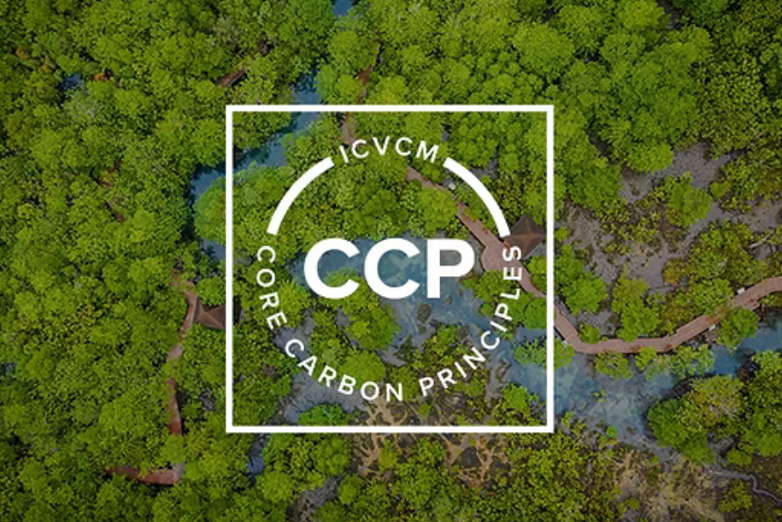
- Look for the CCP label: The Integrity Council for the Voluntary Carbon Market (ICVCM) evaluates credit methodologies. Looking for Core Carbon Principles (CCP) labeled credits is an easy way to screen for high integrity.
- Check headline ratings: Independent rating agencies like Calyx, BeZero, and Sylvera grade projects much like bond ratings. Many offer free headline ratings to help you quickly verify quality.
- Utilize curated marketplaces: Partners like Amazon, Cool Effect, CNaught, and Patch handle the due diligence, navigate the registries, and offer small-volume buying with transparent pricing tailored for SMEs.
3. Build a diversified portfolio
Rather than putting all your budget into a single project, maximize your impact across a balanced portfolio of these three common types of carbon credits:
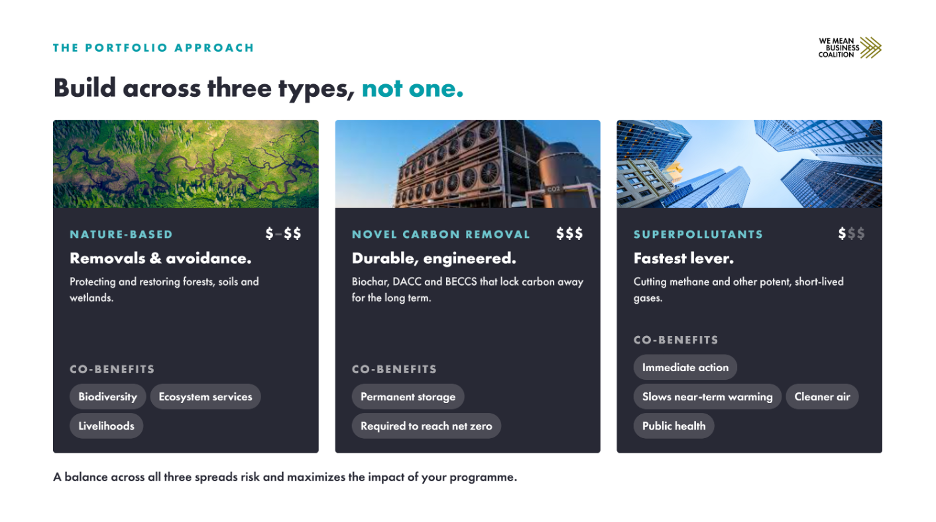
- Nature-based solutions are fast-acting levers that deliver massive co-benefits for biodiversity and local communities. These can include forest restoration, reforestation, and avoiding tropical deforestation.
- Engineered carbon removal technologies like direct air capture store carbon durably in geological formations. These are vital tech solutions needed to scale for global net-zero, and these credits can provide long-lasting, permanent storage.
- Superpollutant mitigation credits like landfill gas capture and the destruction of refrigerants are cost-effective and provide the fastest opportunity to bend the climate curve today.
Take the first step
Climate leadership means taking ownership of your environmental footprint today, not in 2040 or 2050. By pairing internal reductions with highly vetted, transparent carbon credits, your business can protect nature, support global communities, and actively fund the solutions our planet needs right now.