
 Go back






When an SME Leads Its Supply Chain
How Avaids Technovators is working with its SME suppliers to prepare for a changing business landscape
The businesses preparing for tomorrow are increasingly looking beyond their own four walls to the partners, suppliers and customers shaping what comes next.
Avaids Technovators is a Delhi-based engineering, procurement and manufacturing company specializing in industrial lighting and electrical infrastructure. As the business has looked ahead, that thinking has increasingly extended beyond its own operations to the suppliers that help deliver its products and projects.
For years, the company has explored ways to improve energy efficiency and access cleaner, more affordable sources of power. It was also among the early manufacturers in its network to install solar energy systems at its facilities. In 2025, Avaids began taking a more structured look at its own climate footprint, using tools and resources from the SME Climate Hub to build its understanding of emissions and climate action.
That led to a natural next question:
If Avaids was beginning to understand its own footprint, what did its wider supply chain look like?
The company decided to find out.
“For us, staying ahead has always been about looking at where the industry is going, not where it is today. Preparing our business and our supply chain for changing expectations is simply part of being future-ready.”
– Rajesh Piplani, Founder, Avaids Technovators

Rajesh Piplani, Founder, Avaids with former prime minister of Bhutan, Tshering Tobay
Taking climate readiness down the supply chain
Working with the SME Climate Hub, Avaids embarked on a year-long supply chain engagement program with more than 25 SME suppliers.
The objective was to help participating businesses build the knowledge and confidence to understand their emissions, assess where they stood and begin thinking about practical action.
For many suppliers, carbon measurement was new territory. The program therefore started with the fundamentals, building awareness of why emissions matter to their businesses and introducing them to carbon measurement across Scope 1, 2 and 3 emissions.
The program then helped suppliers consider their longer-term sustainability and climate ambitions, and identify practical actions they could begin implementing. A digital platform, developed and customized for Avaids and its suppliers, guided them through each step in a systematic and accessible way. The SME Climate Hub and Avaids team complemented the platform with capacity-building sessions and virtual training.
The process also helped build the Avaids team’s own understanding of climate-related supplier engagement, strengthening their ability to support suppliers through the journey.
Three suppliers received special recognition for their engagement and contribution. Their experiences also created opportunities for peer learning within the cohort and the wider SME Climate Hub India community.
Case studies on two participating suppliers, Gujarat Plug-In Devices and Gilbert & Maxwell Electricals, offer a closer look at how businesses are applying their learning and building capabilities.
For Avaids, this was important. The aim was not to ask suppliers to meet a new set of requirements, but to help them understand why this information increasingly matters to their customers, and what they can do about it.
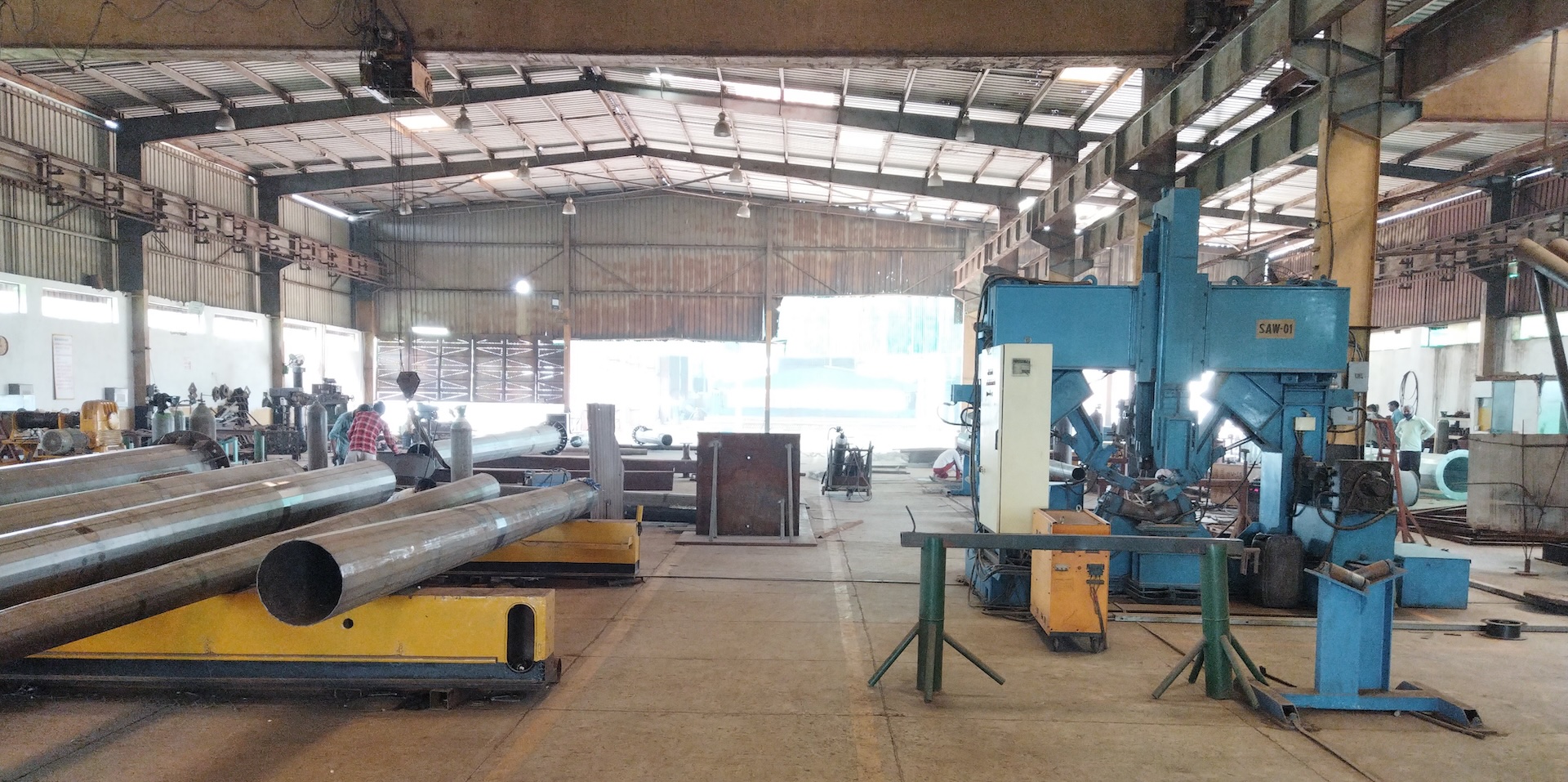
Pole manufacturing unit of Avaids in Alwar, Rajasthan
An SME engaging other SMEs
What makes Avaids’ approach particularly interesting is that it is itself an SME.
Some of the suppliers participating in the program are businesses of a similar operational scale. Avaids therefore wasn’t approaching them simply as a large buyer setting new requirements. It was using an existing business relationship to create a space where suppliers could learn, ask questions and start taking action themselves.
Arun Kumar, who leads procurement at Avaids, played an important role in bringing suppliers on board and guiding them through the different stages of the program. The experience also helped him and the wider procurement team build a stronger understanding of how sustainability and climate considerations can be brought into supplier conversations.
That close engagement gave Arun a first-hand view of how suppliers were beginning to see the relevance of the work to their own businesses. One reflection from his conversation with a supplier stood out:
“Now that it is clearer to me why I am doing this as a business owner, the learning has gone beyond our business with Avaids. It has helped my team understand where we stand and how we can respond when such questions come up in the future.”
The programmatic approach was led by Gayatri Piplani, COO, Avaids Technovators, alongside the procurement team.
“I spent my early years working closely with our suppliers on due diligence. The next step felt obvious: if we were asking them to meet higher standards, we also needed to help them prepare for the changes coming to our industry. It wasn’t easy, but it was important, for them and for us.”
– Gayatri Piplani, COO, Avaids Technovators
The experience also gave Avaids a different perspective on supplier engagement. Building climate capability was not separate from the commercial relationship; it became another way of strengthening it.
Suppliers were learning to measure emissions, but also to understand how that information could inform decisions around energy use, efficiency, investment and customer expectations.
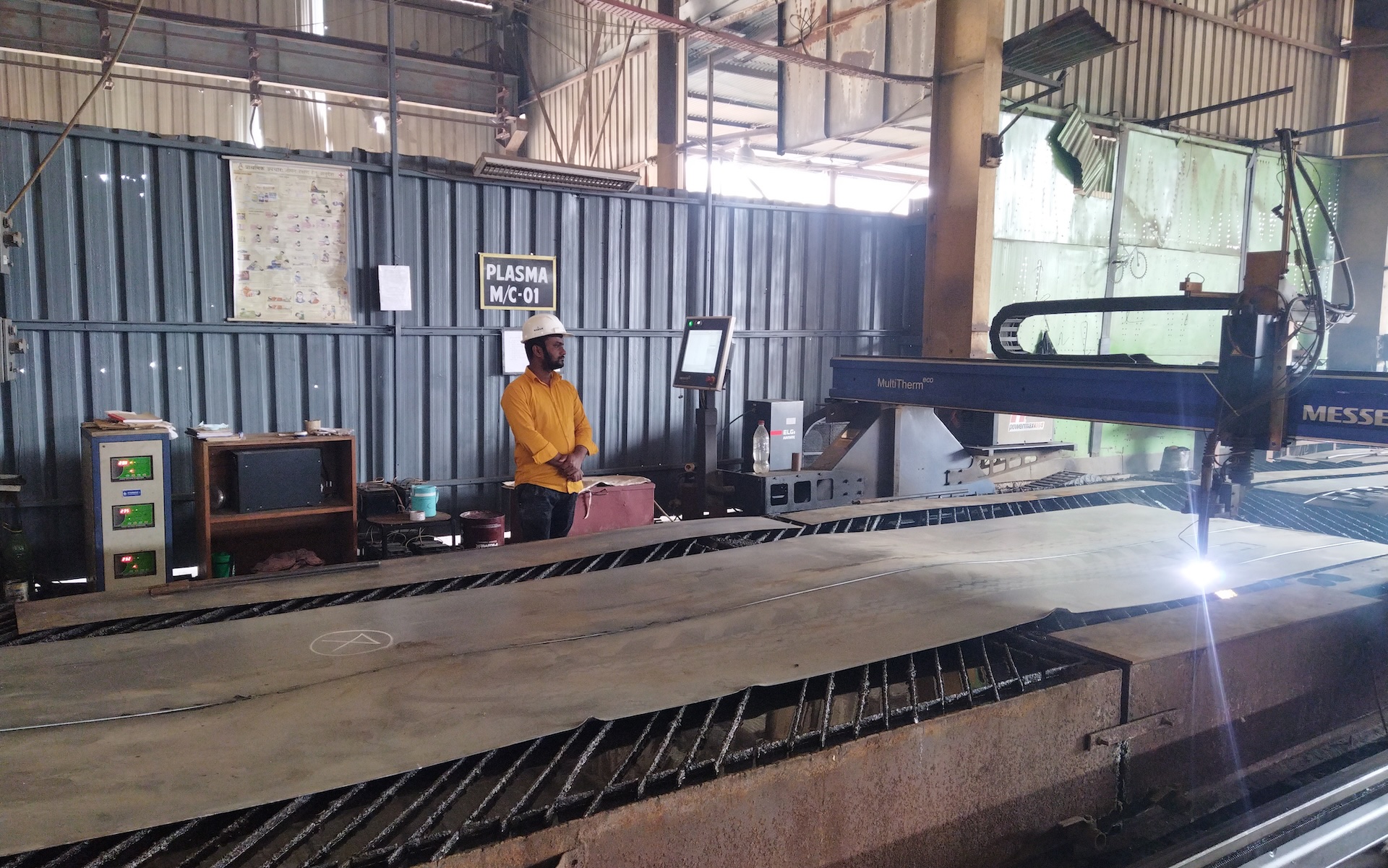
Laser cutting of steel plates at manufacturing unit of Avaids
From measurement to market readiness
For Indian MSMEs, this is becoming increasingly relevant.
As larger companies and global brands work to understand and reduce emissions across their value chains, suppliers are likely to face growing expectations to provide better information about their environmental performance and demonstrate progress.
For a smaller manufacturer, building that capability early can help reduce the risk of being caught unprepared.
Avaids’ experience shows one way this can happen: an SME using its own supply chain relationships to help other SMEs build capabilities that can support their future business needs.
For the wider business community, it also offers an example of how supplier engagement can extend climate action beyond an individual business, using an existing commercial network as a channel for knowledge, tools and practical action.
The opportunity is significant. India has millions of MSMEs operating within the supply chains of larger businesses. Reaching them one by one is difficult. Working through the businesses and networks they already know could help take climate action much further, much faster.
For Avaids, the journey began with understanding its own footprint. It is now helping its suppliers understand theirs.
One SME, one supply chain and one practical step at a time.